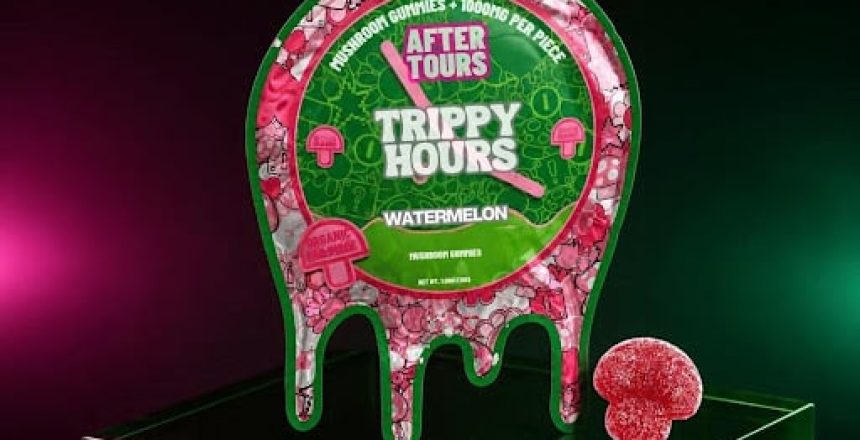
A mushroom gummy labels tells you a lot more than the flavor, because it should explain what kind of mushroom is inside, how much of the active compound each gummy holds, and how you can check the lab results. If the label can’t answer those questions, that’s your answer too.
We sell mushroom gummies every day at Utoya, and most of the questions our customers ask eventually come back to the package itself, so here’s how to read one, line by line, before you buy.
Key Takeaways
- A good mushroom gummy labels names the mushroom species and the active compound instead of a vague “mushroom blend.”
- Look for the amount per gummy and per package. The two numbers are easy to mix up.
- The serving size on the label is the maker’s guidance. Start lower if you’re new, and never go past it.
- A batch number or QR code should lead to a current certificate of analysis from a third-party lab.
- Warnings, an adult-only notice and full ingredients are signs of a careful brand.
- Skip any product with vague blends, missing lab reports or claims that it can treat a health problem.
Shop Now

What should a mushroom gummy labels list first?
The front of the pack is mostly marketing, while the back is where the important facts live. Start with these four things.
1. The mushroom type. “Amanita muscaria,” “lion’s mane” and “reishi” are real names. “Proprietary mushroom blend” is not. If a brand won’t say what’s inside, that’s a reason to keep looking.
2. The active compound. Amanita gummies should list muscimol. Functional mushroom gummies may list an extract of the fruiting body or mycelium instead. Either way, you want a number.
3. The count. Most bags hold somewhere between five and fifteen gummies. That number matters when you do the math below.
4. Who it’s for. A clear “21+ only” or “adults only” line is standard on the products we carry.
Here’s a quick example from our own shelf. Our Amanita mushroom gummies list 500mg of Amanita extract and 4mg of muscimol per gummy, with five gummies per bag. That’s 20mg of muscimol in the full bag. Clear numbers like that are what you want on any mushroom gummy labels.
How do you read muscimol per gummy versus per package?
This is the part that trips people up most often.
Some labels lead with the total for the whole bag because the number looks bigger, while others lead with the amount in a single gummy. If you only glance at the front, you could think one piece holds what the entire bag holds.
Do this every time:
- Find the amount of the active compound per gummy.
- Find the gummy count.
- Multiply. The result should match the “per package” number.
If the math doesn’t line up, or one of the numbers is missing, set the product down, since mistakes on a label usually point to sloppy work elsewhere in the process.
What does mushroom gummy serving size really mean?
The serving size is the manufacturer’s suggestion for one use. It isn’t a target, and it certainly isn’t a promise of how you’ll feel.
People respond in very different ways, since body weight, food in your stomach, other substances you’ve taken and your own body chemistry all play a part. That’s why we tell new buyers the same thing every time: start with less than a full serving, wait, and don’t take more just because you feel nothing yet. Some mushroom gummies take an hour or more to kick in. Our guide on how long mushroom gummies last covers timing in more detail.
A few habits help:
- Cut a gummy in half or quarters if the label allows it.
- Write down the time you took it.
- Don’t mix with alcohol or other substances.
- Never drive or use machinery afterward.
If a mushroom gummy labels has no serving size at all, that’s a red flag. You shouldn’t have to guess.
How do you check the certificate of analysis?
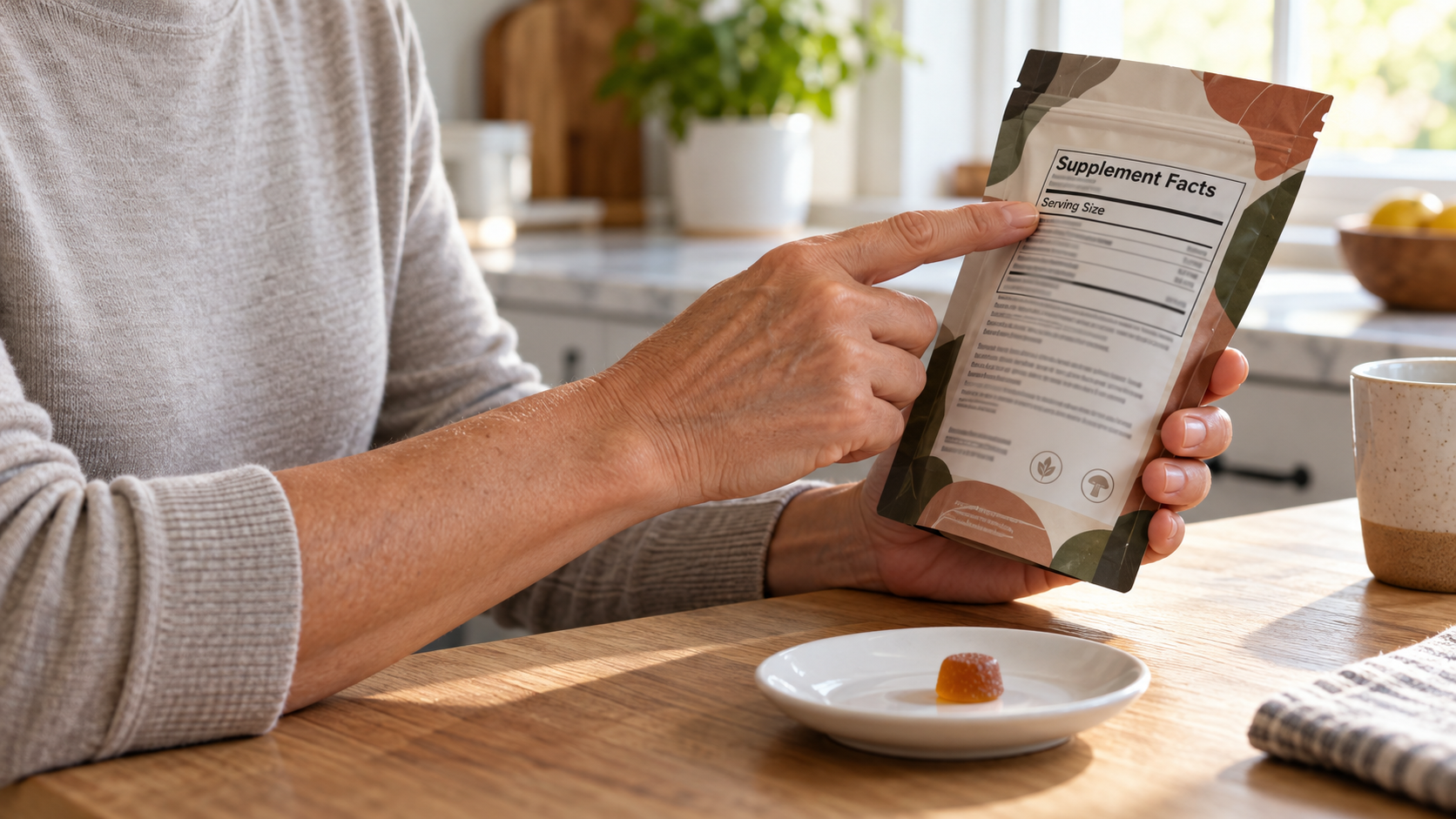
A certificate of analysis, or COA, is a laboratory report for one specific production batch, and it’s the most reliable way to see whether the numbers on the package actually hold up.
Here’s what to look for when you open one:
- A third-party lab name. It should be an outside lab, not the brand itself.
- A batch or lot number that matches the one printed on your package.
- A recent test date. Old reports may not reflect what’s in your bag.
- Active compound results that match the mushroom gummy label within a reasonable range.
- Contaminant results where available, such as heavy metals, microbes and pesticides.
Most of the products we carry have a QR code or a “View COA” link on the product page. If you can’t find the report, reach out to our team and we’ll help you track it down.
Which red flags should make you skip a product?
Unfortunately, not every bag on the market is manufactured with the same level of care. In 2024, the FDA investigated illnesses linked to one brand of mushroom chocolates and gummies and told people not to eat them. Cases like that are why labels and lab reports matter.
| What you see on the label | What it may mean |
| “Proprietary blend” with no amounts | You can’t tell what or how much is inside |
| No batch number or QR code | No easy way to match a lab report |
| Totals with no per-gummy amount | Easy to take more than you meant to |
| Health or cure claims | The brand is making promises it can’t back up |
| No warnings or age notice | Little care went into the packaging |
| COA from the brand’s own lab | Not an independent check |
If you spot any of these, it’s worth choosing a different product.
Are amanita gummies and functional mushroom gummies labels the same way?
Not quite. Because they’re very different products, their labels focus on different information.
Amanita gummies are made from Amanita muscaria extract. Their labels should list muscimol in milligrams. These are adult-use products with real effects, so warnings and serving guidance matter a lot. If you’re new to them, read our post on whether amanita mushroom gummies are safe before you buy.
Functional mushroom gummies use species like lion’s mane, reishi or cordyceps. Their labels usually list the extract amount and whether it comes from the fruiting body, the mycelium or both. They aren’t meant to produce a high. You can compare them with our functional mushroom collection, which includes tinctures and supplements.
Neither type is a medicine, and labels that claim to treat anxiety, sleep problems or any other illness are a clear signal to look elsewhere.
What else belongs on a careful mushroom gummy label?
Beyond the basics, a well-made mushroom gummy label usually includes:
- A full ingredient list, including allergens like wheat or gelatin.
- Storage directions, such as “keep in a cool, dry place.”
- A “keep away from children and pets” notice.
- A note to talk with a doctor if you’re pregnant, nursing, taking medicine or managing a health condition.
- The maker’s or distributor’s name and a way to contact them.
These details don’t make a gummy any stronger, but they do tell you the brand thought carefully about the person on the other end.
Shop Now
Shop Mushroom Gummies With Clear Labels at Utoya
We’re a Clearwater, Florida, shop, and we want you to know what you’re buying. You can browse our Amanita mushroom collection and open the lab report for each product right on its page. Have a question about a label? Our team is happy to help. Call Utoya Organics today at 813-697-4747.
These products are for adults 21 and older. They are not intended to diagnose, treat, cure or prevent any disease, and these statements have not been evaluated by the FDA. Laws on mushroom products vary by state and city, so check the rules where you live before you buy. This article is for general information only and isn’t medical or legal advice. Talk with a healthcare professional before using any new product.
Frequently Asked Questions
Q: What is the most important thing on a mushroom gummy labels?
A: The active compound per gummy, because without that number you can’t judge strength or compare different products. Look for a clear milligram amount, like muscimol per gummy for Amanita products.
Q: How do I know if a mushroom gummy label is accurate?
A: Match the batch number on the pack to a current certificate of analysis from a third-party lab. The lab results should line up with the label within a reasonable range.
Q: Should I take the full mushroom gummy serving size?
A: Not at first. The serving size is the maker’s guidance, not a starting point. Many adults begin with a smaller piece, wait at least an hour and never go past the label.
Q: Do mushroom gummies list psilocybin?
A: Amanita gummies list muscimol, and functional mushroom gummies list species extracts. Psilocybin is a controlled substance under federal law. If a label is unclear about what’s inside, skip it.
Q: Where can I find the lab report for Utoya mushroom gummies?
A: Check the product page for a “View COA” link or scan the QR code on the pack. If you can’t find it, contact our team and we’ll send it to you.