For consumers who prioritize predictable safety and clear federal regulatory status, Amanita Mushroom Extract is difficult to describe as “worth it” based on the evidence available today.
Price and product quality matter, but they do not resolve the larger concern: the U.S. Food and Drug Administration currently advises consumers to avoid foods containing Amanita muscaria, its extracts, or constituents such as muscimol, ibotenic acid, and muscarine. After reviewing more than 600 scientific publications and other safety information, FDA concluded that these substances do not meet the safety standard for use as conventional food ingredients and may be harmful.
That does not mean every product marketed with the word “Amanita” is identical. Extracts can differ in composition, processing, testing, potency, and additional ingredients.
It does mean consumers should evaluate this category differently from an ordinary gummy or wellness supplement.
At Utoya, we believe questions about price and product quality should begin with transparency. A low price does not make an uncertain product a good value, and premium packaging does not establish safety.
Key Takeaways
- FDA currently recommends that consumers avoid foods containing Amanita muscaria, Amanita extracts, muscimol, ibotenic acid, or muscarine.
- FDA stated in a 2025 enforcement action that available evidence was inadequate to provide reasonable assurance that Amanita muscaria used as a dietary ingredient does not present a significant or unreasonable risk of illness or injury.
- Sticker price is a poor way to compare Amanita products because “milligrams of extract” do not necessarily tell you how much muscimol or ibotenic acid is present.
- Product-quality claims are stronger when they are supported by batch-specific independent laboratory results, not simply phrases such as “premium,” “lab tested,” or “made in an FDA-registered facility.”
- Mushroom-labeled psychoactive edibles have shown serious marketplace-quality problems, including products containing multiple unexpected or undisclosed psychoactive substances.
- Amanita should not be presented as an FDA-approved treatment for anxiety, sleep, pain, or another medical condition.
Shop Now

What Is Amanita Mushroom Extract?
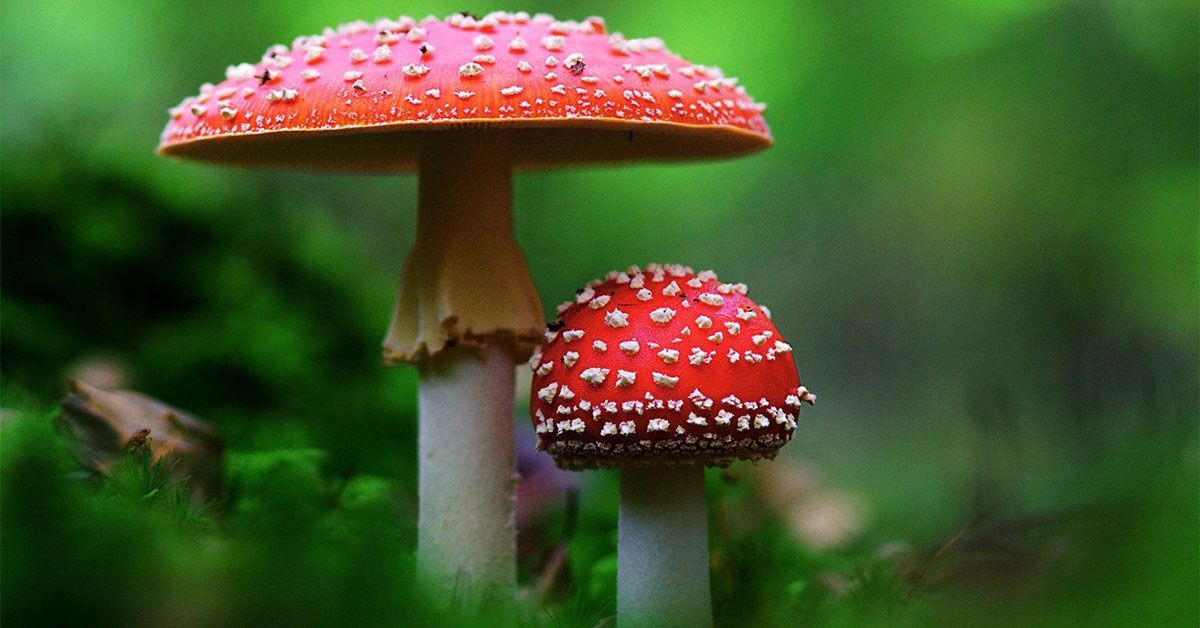
Amanita Mushroom Extract generally refers to material extracted from mushrooms such as Amanita muscaria, commonly known as fly agaric.
Amanita muscaria is different from psilocybin-containing mushrooms.
Its best-known psychoactive constituents include muscimol and ibotenic acid. FDA’s scientific assessment describes muscimol as acting on GABA receptors, while ibotenic acid has excitatory activity involving glutamate receptors. These compounds are associated with the mushroom’s neurological effects and toxicity profile.
Products marketed as Amanita extracts can appear as:
- Gummies
- Tinctures
- Capsules
- Chocolates
- Concentrated extracts
- Blended mushroom products
The problem with comparing them is that a label stating “500 mg Amanita extract” or “1,000 mg mushroom blend” does not necessarily tell you how much of each pharmacologically active compound is actually present.
That is why total extract weight and active-compound testing should not be treated as interchangeable.
Is Amanita Mushroom Extract FDA Approved?
No. Amanita Mushroom Extract is not FDA approved as a food ingredient or as a treatment for a medical condition.
In December 2024, FDA stated that Amanita muscaria, its extracts, muscimol, ibotenic acid, and muscarine are not authorized ingredients for conventional foods. FDA concluded that the available information does not establish them as Generally Recognized as Safe, or GRAS.
FDA went further in a September 2025 warning letter involving a different manufacturer.
The agency stated that Amanita muscaria and its extract are new dietary ingredients and that there was inadequate information to provide reasonable assurance that they do not present a significant or unreasonable risk of illness or injury. FDA consequently deemed the Amanita-containing supplements discussed in that warning letter adulterated under federal law.
That regulatory distinction matters when considering whether a product is worth its price.
Something being available online does not mean FDA has reviewed or approved it for safety.
What Are the Main Safety Concerns With Amanita Mushroom Extract?
The principal concern is neurological toxicity combined with uncertainty about product composition and individual response.
FDA’s scientific review identified reports involving:
- Central nervous system depression
- Drowsiness
- Delirium
- Agitation
- Hallucinations
- Seizures
- Coma
- Respiratory depression
- Cardiovascular effects
- Hospitalization
FDA’s poison-center review also identified hundreds of reports associated with Amanita, muscimol, ibotenic acid, or related mushroom preparations.
These are not the kinds of risks that should be reduced to a disclaimer at the bottom of a product page.
Processing Does Not Create an FDA-Established “Safe Dose”
You may encounter claims that processing or “decarboxylation” converts ibotenic acid into muscimol and therefore makes an Amanita product safe.
Processing can change chemical composition.
But FDA’s current conclusion is not that properly processed Amanita is established as safe. Its conclusion is that available evidence does not provide sufficient assurance of safety for these ingredients in food, and the agency recommends avoiding them.
That is why we would not use preparation method alone as proof of safety.
What Does the Diamond Shruumz Outbreak Tell Consumers?
It provides an important lesson about the broader psychoactive mushroom-product market, although it should not be misrepresented as proof that every Amanita product causes the same effects.
CDC and FDA investigated severe illnesses associated with Diamond Shruumz and other mushroom-containing products during 2024.
CDC’s updated investigation reported 180 illnesses in 34 states, 73 hospitalizations, and two associated deaths. Among cases with available outcome data, some required intensive care and endotracheal intubation.
Testing identified multiple substances across products, including muscimol as well as substances such as psilocin, O-acetylpsilocin, kavalactones, and pregabalin.
The useful takeaway is not “all mushroom gummies contain these ingredients.”
It is that a package marketed as a mushroom product may not tell the consumer everything needed to predict what is actually inside it.
That makes independent analytical testing particularly important.
How Should You Evaluate Amanita Mushroom Extract Quality?
If you are comparing products in this category despite the FDA warning, the useful quality questions are more technical than whether the package looks professional.
Look for Batch-Specific Laboratory Results
A strong Certificate of Analysis, or COA, should correspond to the batch you are considering rather than being a generic report from an old production run.
For an Amanita extract, relevant testing should make clear what was actually measured.
That can include:
- Muscimol
- Ibotenic acid
- Other declared active ingredients
- Heavy metals
- Pesticides where applicable
- Microbial contamination
- Residual solvents where relevant
- Other contaminants appropriate to the manufacturing process
A “lab tested” logo without accessible results tells you very little.
Check Whether the Numbers Match the Label
A product can have a legitimate laboratory document and still create questions if the test results do not correspond clearly with the label.
Compare:
Product label → batch number → COA → measured compounds → units of measurement.
They should make sense together.
A third-party 2026 review of Utoya’s Amanita product praised the availability of muscimol and ibotenic-acid testing but also noted that contaminant testing such as heavy metals, pesticides, and residual solvents was not clearly documented in the material the reviewer evaluated.
That illustrates an important principle: one analytical panel does not necessarily establish complete product quality.
Identify Every Active Ingredient
Be careful with terms such as:
- Proprietary mushroom blend
- Magic blend
- Mushroom matrix
- Psychoactive mushroom complex
Those terms may not disclose enough to understand what creates the product’s effects.
A consumer should be able to distinguish an Amanita-only extract from a product combining mushrooms with cannabinoids or other psychoactive substances.
That distinction becomes especially important when comparing safety and price.
Does “Made in an FDA-Registered Facility” Mean FDA Approved?
No. FDA facility registration does not mean FDA has approved or endorsed the facility’s products.
Food facilities that meet certain criteria are required to register with FDA. FDA guidance states that assignment of a food-facility registration number does not convey FDA approval or endorsement of either the facility or its products.
This distinction matters when assessing product-quality marketing.
“FDA registered” and “FDA approved” mean very different things.
A consumer should not treat registration as evidence that FDA has determined an Amanita product is safe.
How Much Should Amanita Mushroom Extract Cost?
There is no useful universal “fair price” for Amanita Mushroom Extract because products can differ substantially in active-compound content, testing, formulation, and serving count.
This makes simple price-per-gummy comparisons weak.
Imagine two products:
Product A: $20 with a large stated amount of “mushroom extract,” but no clear active-compound results.
Product B: $30 with batch-specific testing for muscimol and ibotenic acid plus broader contaminant screening.
Product B provides more information for the extra money.
But that does not mean laboratory testing overrides FDA’s safety concerns or makes the product established as safe.
Price therefore needs to be considered in layers.
Sticker Price
What does the package cost?
Price Per Unit
How many gummies, capsules, or servings are included?
Price Per Verified Active Compound
Does laboratory testing confirm the compound that supposedly determines the product’s effect?
Cost of Quality Verification
Does the manufacturer pay for meaningful third-party testing rather than relying solely on an ingredient supplier’s paperwork?
Regulatory and Safety Uncertainty
This is harder to put into a dollar figure, but it belongs in the value calculation.
If a consumer wants predictable, low-risk wellness support with established clinical evidence, the uncertainty surrounding Amanita makes a cheap product difficult to characterize as a bargain.
Is More Muscimol Better Quality?
No. Higher potency and higher quality are not the same thing.
Quality means that the product is what it claims to be and that its composition is characterized as accurately as possible.
Potency describes how much active compound is present.
A more concentrated psychoactive product may increase exposure rather than improve quality.
For Amanita products, the better questions are:
- Is the stated potency independently verified?
- Is ibotenic acid quantified?
- Are other psychoactive ingredients present?
- Is the laboratory report tied to the current batch?
- Has contaminant testing been performed?
- Does the label match the test result?
“Strongest” should not be treated as synonymous with “best.”
What About Claims That Amanita Helps With Sleep or Anxiety?
Those claims should be treated cautiously because Amanita products are not FDA-approved treatments for sleep disorders, anxiety, chronic pain, or other medical conditions.
Research into muscimol and other constituents is not equivalent to clinical evidence showing that commercially available Amanita gummies or extracts safely treat a medical condition.
FDA’s current safety assessment points in the opposite direction from treating Amanita as an ordinary wellness ingredient: the agency says the available evidence does not establish its safe use in conventional food and recommends that consumers avoid foods containing it.
Anecdotal reports of relaxation or sleep do not establish therapeutic efficacy.
Anyone considering a psychoactive product because of anxiety, insomnia, pain, or another health concern should discuss the underlying issue with a qualified healthcare professional instead of treating Amanita as a proven substitute for care.
Are Amanita Mushrooms the Same as Psilocybin Mushrooms?
No. Amanita muscaria and psilocybin-containing mushrooms have different active compounds and pharmacology.
Amanita’s psychoactive effects are associated primarily with compounds such as muscimol and ibotenic acid.
Psilocybin mushrooms contain psilocybin, which is metabolized to psilocin.
Confusing the two can lead to inaccurate expectations about:
- Effects
- Duration
- Toxicity
- Drug interactions
- Legal status
- Product composition
This distinction becomes particularly important when a package uses broad terms such as “magic mushrooms” without clearly identifying the active ingredients.
How Much Weight Should You Give Online Reviews?
Customer reviews may tell you whether someone liked a flavor, texture, shipping experience, or packaging.
They cannot establish toxicological safety.
Likewise, an affiliate review ranking one product above another is not equivalent to an FDA safety assessment or independent clinical evidence.
The competitor article provided for this topic ranks commercial Amanita products and discusses dosing and product selection. That can be useful for understanding how the marketplace compares products, but it should not outweigh FDA’s current conclusion that Amanita and its relevant constituents do not meet the safety standard for use in conventional food.
Source hierarchy matters.
For safety questions, regulatory and public-health evidence deserves more weight than consumer rankings.
Shop Now
So, Is Amanita Mushroom Extract Worth It?
Based on current federal safety guidance, Amanita Mushroom Extract is difficult to recommend as a routine consumer wellness purchase.
The biggest issue is not whether one pouch costs $20, $30, or $40.
It is that:
- FDA recommends avoiding foods containing Amanita and its relevant psychoactive constituents.
- FDA says the available evidence does not establish safe use in conventional food.
- FDA has also raised significant safety concerns about Amanita used as a dietary ingredient.
- Psychoactive mushroom products have demonstrated real marketplace problems involving uncertain and unexpected ingredients.
- Commercial potency and testing practices can vary.
- Purported therapeutic benefits are not established by FDA-approved clinical evidence.
That does not make product transparency meaningless.
Quite the opposite.
If a company participates in this category, consumers should be able to see exactly what is claimed to be in the product, what an independent laboratory measured, which contaminants were tested, and which batch the report represents.
But transparency should not be used to turn an uncertain ingredient into a claim of proven safety.
At Utoya, consumers can browse laboratory information and product details before making a purchase decision. We encourage people to read those materials carefully, distinguish Amanita products from other mushroom formulations, and take current FDA guidance seriously.
If the current safety uncertainty is outside your comfort level, the reasonable choice is not to use an Amanita product. Call Utoya Organics today at 813-697-4747
Frequently Asked Questions
Q: Is Amanita Mushroom Extract safe?
A: FDA does not currently consider Amanita muscaria, its extracts, muscimol, ibotenic acid, or muscarine established as safe ingredients for conventional food. The agency recommends that consumers avoid foods containing them.
Q: Is Amanita Mushroom Extract FDA approved?
A: No. FDA has not approved Amanita Mushroom Extract as a conventional food ingredient or as a treatment for a medical condition. FDA currently considers Amanita and several of its constituents unauthorized food additives when added to conventional foods.
Q: What should an Amanita laboratory report show?
A: For meaningful product evaluation, look for a batch-specific report that identifies the tested sample and quantifies relevant active compounds such as muscimol and ibotenic acid. Broader quality evaluation can also include appropriate contaminant testing, such as heavy metals, pesticides, microbiological contaminants, or residual solvents when applicable.
Q: Does removing ibotenic acid make Amanita extract safe?
A: Reducing ibotenic acid can change an extract’s chemical profile, but it does not establish the finished product as safe. FDA’s current assessment includes concerns involving Amanita muscaria, Amanita extract, muscimol, ibotenic acid, and muscarine rather than identifying ibotenic acid as the sole issue.
Q: Are expensive Amanita products safer?
A: Price does not establish safety. More expensive products may provide better testing, ingredient disclosure, or manufacturing documentation, but those factors do not override FDA’s safety assessment.
Q: Can Amanita Mushroom Extract help with anxiety or sleep?
A: Commercial Amanita extracts are not FDA-approved treatments for anxiety or sleep disorders. Anecdotal reports should not be treated as clinical evidence of safety or efficacy.
Q: Are Amanita and psilocybin the same?
A: No. Amanita products and psilocybin mushrooms contain different psychoactive compounds and produce effects through different pharmacological mechanisms.
Q: Does an FDA-registered facility mean its Amanita products are approved?
A: No. FDA states that food-facility registration does not convey FDA approval or endorsement of the facility or its products.