Is Molly legal? Molly is a name that often comes up in conversations about music festivals, nightlife, and party culture. Although many people use the term casually, it usually refers to MDMA, the same controlled substance commonly associated with ecstasy.
Today, however, the marketplace is becoming more complicated. Alongside traditional Molly, consumers may also encounter products marketed as “Molly alternatives” or “Molly 2.0.” These products are not necessarily the same as MDMA and should not automatically be assumed to have the same legal status. A product’s name, packaging, or marketing does not determine whether it is legal—its actual ingredients and the laws that apply to those ingredients do.
Understanding these differences is important before purchasing or using any product associated with the term “Molly.”
In this guide, you’ll learn:
- What Molly is and how it relates to MDMA
- Whether Molly and ecstasy are the same thing
- Why MDMA is illegal under federal law
- How Florida classifies MDMA
- Why product names don’t always determine legality
- What “Molly 2.0” means
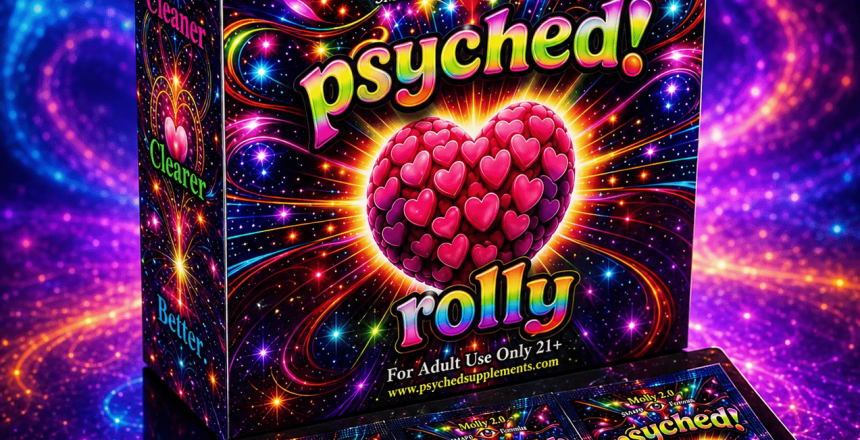
- How products like Psyched! Rolly Tablets differ from traditional Molly
Important: This article is intended for general educational purposes only and should not be considered legal or medical advice. Drug laws vary depending on the substance involved, the specific circumstances, and the jurisdiction. Always review the laws that apply where you live or speak with a qualified legal professional if you have questions.
Shop Now
Quick Answer: Is Molly Legal?
No. Traditional Molly containing MDMA is illegal under both federal law and Florida law.
The U.S. Drug Enforcement Administration (DEA) classifies MDMA (3,4-methylenedioxymethamphetamine) as a Schedule I controlled substance under the Controlled Substances Act. As a result, the unauthorized possession, manufacture, distribution, or sale of MDMA is prohibited throughout the United States.
Florida law also lists MDMA as a Schedule I controlled substance, making traditional Molly illegal for recreational purchase, possession, or use within the state.
However, not every product marketed using terms such as “Molly,” “Molly alternative,” or “Molly 2.0” contains MDMA. Some commercially marketed adult-use products use entirely different formulations. Their legal status depends on the specific ingredients they contain—not on the branding or product name.
This distinction is important because consumers often assume that anything labeled as a Molly alternative is simply another form of MDMA. In reality, products with similar marketing language may fall into different categories and should always be evaluated based on their ingredient lists and the laws governing those ingredients.
What Is Molly?
Molly is a common street name for MDMA (3,4-methylenedioxymethamphetamine), a synthetic substance that the DEA describes as having both stimulant and hallucinogenic properties. Traditionally, it has been associated with nightlife and festival settings because users often seek its stimulant and mood-altering effects.
The term “Molly” became popular because it was often marketed as a supposedly “pure” form of MDMA, usually sold as a powder or contained inside capsules. In contrast, ecstasy has more commonly been associated with pressed tablets or pills. While the appearance may differ, both names generally refer to products expected to contain MDMA.
Common Forms of Molly
Products sold as Molly have appeared in several forms, including:
- Loose powder
- Crystalline material
- Gel capsules
- Powder-filled capsules
- Occasionally tablets or pressed pills
Although powder and capsules are the formats most commonly associated with Molly, appearance alone does not reveal what a product actually contains.
Does “Molly” Always Mean MDMA?
Not necessarily.
“Molly” is an informal street name—not a scientific, legal, or regulated product category. Unlike commercially manufactured products, illicit substances are not subject to standardized labeling or ingredient verification.
That means simply calling a product “Molly” does not confirm:
- That it actually contains MDMA
- The amount of any ingredient present
- Whether additional substances have been mixed in
- How consistently it was manufactured
- Its purity or overall composition
This is one reason experts encourage consumers not to rely solely on product names or appearances. Two products marketed as “Molly” may have very different chemical compositions, making the label itself an unreliable indicator of what’s actually inside.
Molly vs. Ecstasy: What’s the Difference?
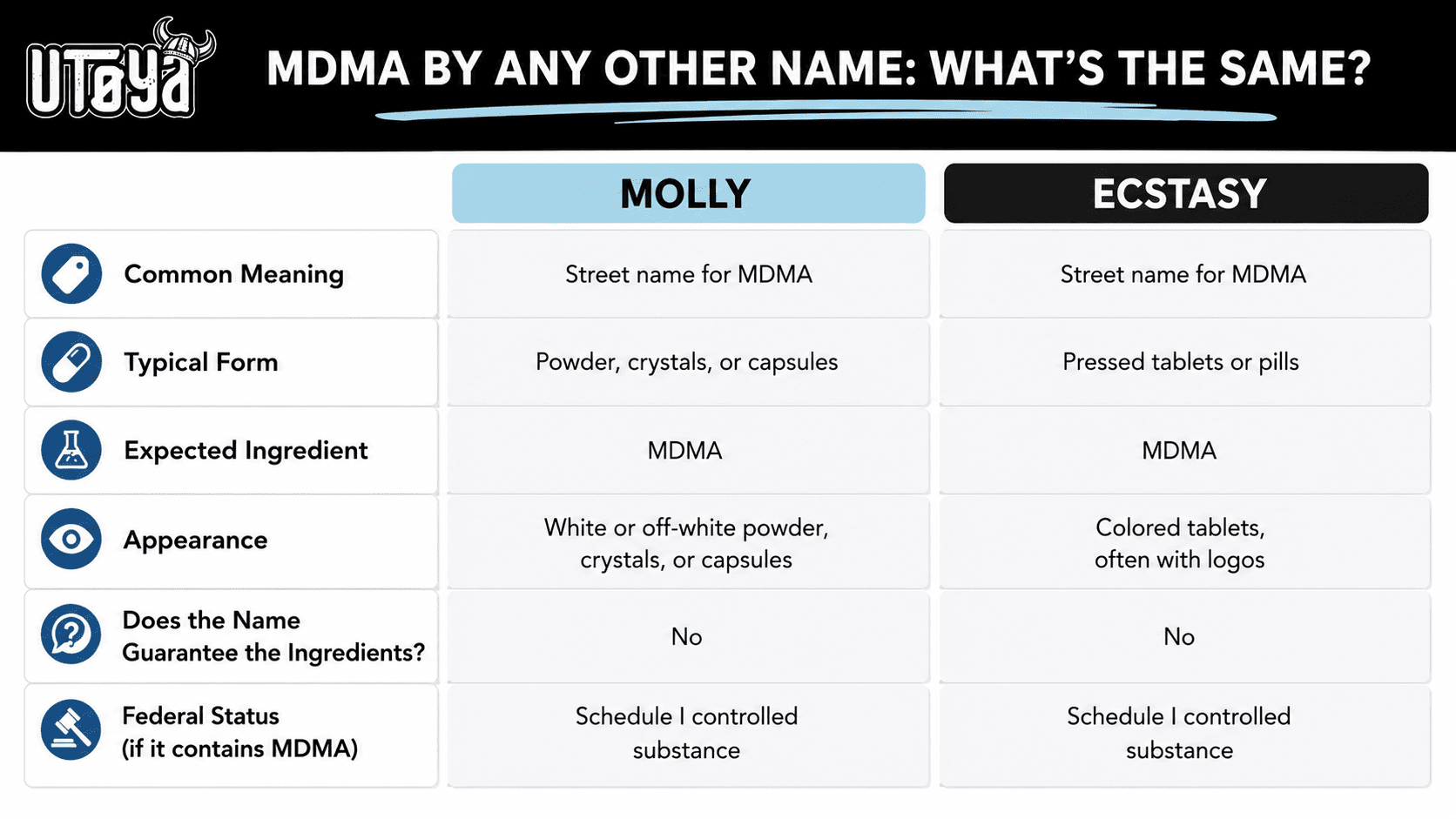
Many people use the terms Molly and ecstasy interchangeably, and in most cases, they are referring to the same primary substance: MDMA (3,4-methylenedioxymethamphetamine). The biggest difference is usually how the product is presented and marketed, not the chemical compound itself.
Historically, Molly has been associated with powders, crystals, or capsules, while ecstasy is more commonly linked to pressed tablets that may feature colors, shapes, or stamped logos. Although these distinctions are widely recognized, they are not strict scientific definitions.
| Feature | Molly | Ecstasy |
| Common Meaning | Street name for MDMA | Street name for MDMA |
| Typical Form | Powder, crystals, or capsules | Pressed tablets or pills |
| Expected Ingredient | MDMA | MDMA |
| Appearance | White or off-white powder, crystals, or capsules | Colored tablets, often with logos |
| Does the Name Guarantee the Ingredients? | No | No |
| Federal Status (if it contains MDMA) | Schedule I controlled substance | Schedule I controlled substance |
The important point is that the law focuses on the substance—not the nickname or packaging. Whether a product is called Molly, ecstasy, MDMA, X, XTC, or another street name, it is treated the same under federal law if laboratory testing confirms it contains MDMA.
Likewise, a product marketed as a “Molly alternative” or “Molly 2.0” should not automatically be assumed to contain MDMA. Marketing terms describe how a product is positioned—they do not identify its ingredients or determine its legal status.
Why MDMA Is Illegal Under Federal Law
MDMA is illegal under federal law because it is classified as a Schedule I controlled substance under the Controlled Substances Act (CSA).
The Controlled Substances Act organizes drugs and other regulated substances into five schedules based on factors such as their accepted medical use, potential for abuse, scientific evidence, and risks to public health. According to the U.S. Drug Enforcement Administration (DEA), Schedule I substances are considered to have a high potential for abuse and no currently accepted medical use under federal law.
MDMA has remained in Schedule I for decades and continues to be listed by the DEA under its chemical name, 3,4-methylenedioxymethamphetamine, as well as its commonly used names, including MDMA, ecstasy, and XTC.
Because of this classification, federal law generally prohibits the unauthorized:
- Possession of MDMA
- Manufacture or production of MDMA
- Sale or distribution of MDMA
- Possession with intent to distribute
- Transportation of MDMA as part of unlawful distribution
The legal consequences for these offenses vary depending on the specific facts of a case, including the quantity involved, the alleged conduct, prior convictions, and other applicable federal or state laws.
Does Research Make MDMA Legal?
No.
MDMA has been studied in authorized scientific and clinical research, but research does not make the substance legal for general recreational purchase or use.
Federal agencies may authorize qualified researchers or institutions to study controlled substances under strict regulatory requirements. These limited research exceptions should not be interpreted as creating a legal consumer market for MDMA.
For the general public, traditional Molly containing MDMA remains a federally controlled substance.
Is Molly Legal in Florida?
No. Traditional Molly containing MDMA is also illegal under Florida law.
Florida classifies 3,4-methylenedioxymethamphetamine (MDMA) as a Schedule I controlled substance under Florida Statute § 893.03. Similar to federal law, Florida defines Schedule I substances as having a high potential for abuse and no currently accepted medical use under the statutory definition.
As a result, Florida law generally prohibits the unauthorized:
- Purchase of MDMA
- Possession of MDMA
- Sale or delivery of MDMA
- Manufacture of MDMA
- Possession with intent to sell, manufacture, or deliver
Depending on the circumstances, violations may result in serious criminal penalties. Factors such as the amount involved, the alleged conduct, prior criminal history, and where the offense occurred can all influence how a case is charged and prosecuted.
It’s also important to remember that a product’s name does not determine how Florida law applies. If laboratory testing identifies a substance as MDMA, Florida’s controlled-substance laws may apply regardless of whether it was marketed as Molly, ecstasy, or another nickname.
At the same time, not every product marketed using terms like “Molly alternative” or “Molly 2.0” contains MDMA. Some commercially packaged adult-use products use entirely different formulations, making it important to review the actual ingredients rather than relying on branding alone.
Does Molly Always Contain MDMA?
No. A product sold as “Molly” does not necessarily contain pure MDMA—and in some cases, it may not contain MDMA at all.
Unlike commercially manufactured products, illicit substances are not subject to standardized production, ingredient labeling, or quality control. As a result, the name “Molly” alone does not tell you exactly what a product contains.
Research and public health agencies have reported that products sold as Molly may contain:
- MDMA
- MDMA combined with other substances
- Other stimulants
- Synthetic cathinones (“bath salts”)
- Caffeine or other additives
- Unknown mixtures of compounds
- No MDMA at all
Because appearance alone cannot identify a substance, powders, capsules, crystals, and tablets should never be assumed to contain a particular ingredient based solely on how they look or what they are called.
The National Institute on Drug Abuse (NIDA) also cautions that the name “Molly” should not be interpreted as proof that a product contains pure MDMA. The only reliable way to know what a product contains is through accurate ingredient disclosure or laboratory testing.
This is one reason consumers should evaluate products based on their actual formulation, not their marketing or street name.
What Does “Molly 2.0” Mean?
“Molly 2.0” is a marketing term, not a scientific or legal classification.
It is commonly used to describe products positioned as modern alternatives to traditional Molly. Rather than referring to MDMA itself, the phrase generally indicates that a product uses a different formulation while targeting adults looking for a similar product category.
Unlike traditional Molly, products marketed as “Molly 2.0” may include:
- Different active ingredients
- Commercial packaging
- Clearly disclosed ingredient information
- Responsible-use instructions
- Standardized serving formats
Because there is no official definition of “Molly 2.0,” each product should be evaluated individually.
| Traditional Molly | Products Marketed as “Molly 2.0” |
| Typically refers to MDMA | Marketing term for alternative formulations |
| Often sold as powder, crystals, or capsules | Frequently sold as tablets, capsules, gummies, or other branded formats |
| Ingredient composition may be unknown | Ingredients may be disclosed by the manufacturer |
| Usually sold through illicit markets | Often presented as commercial adult-use products |
| MDMA is federally controlled | Legal status depends on the product’s ingredients and applicable laws |
Rather than relying on terms like “Legal Molly,” “Next-Generation Molly,” or “Molly 2.0,” consumers should always review the product’s ingredient list, manufacturer information, and the laws that apply where they live.
Psyched! Rolly Tablets: A Modern Molly Alternative
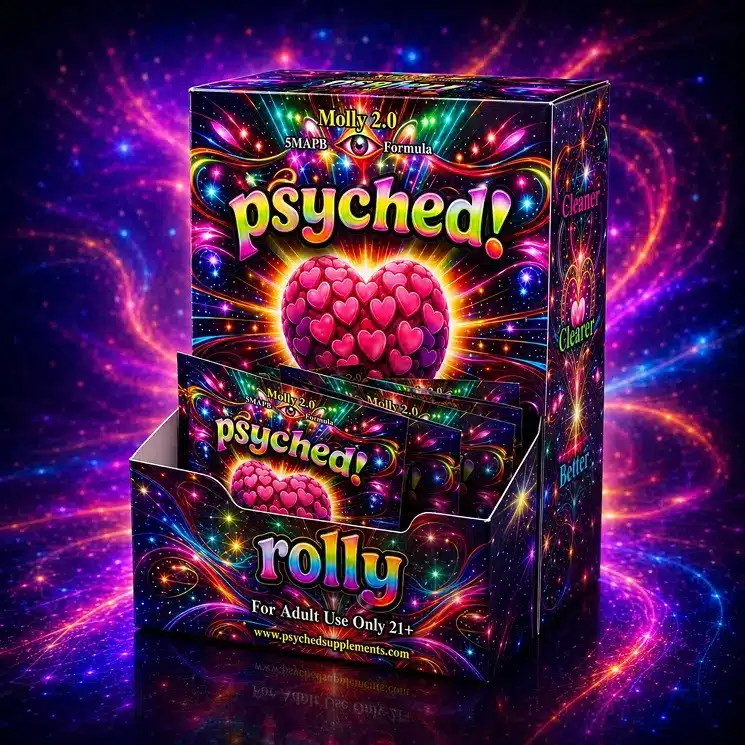
One example of a product marketed within this emerging category is Psyched! Rolly Tablets.
Unlike traditional Molly, Psyched! Rolly is not represented as MDMA or ecstasy. Instead, it is marketed as an adult-use product featuring the company’s proprietary 5MARB formulation.
According to the manufacturer, each tablet contains a disclosed amount of 5-MAPB, providing consumers with ingredient information that is typically unavailable with illicit products sold under the name Molly.
The product is also manufactured in a scored tablet format, making it different from the powders, crystals, and unmarked capsules commonly associated with traditional street-market Molly.
How Psyched! Rolly Differs From Traditional Molly
| Psyched! Rolly Tablets | Traditional Molly |
| Commercially packaged adult-use tablet | Usually sold as powder, crystals, or capsules |
| Proprietary 5MARB formulation | Typically expected to contain MDMA |
| Manufacturer discloses ingredients | Ingredient composition may be unknown |
| Standardized tablet presentation | No standardized product format |
| Includes product directions and labeling | May not include ingredient or safety information |
These differences highlight why products marketed as Molly alternatives should not automatically be considered the same as traditional Molly. While they may appeal to consumers looking for similar product categories, their ingredients, formulation, and legal considerations can be very different.
Get yours here: https://utoya.com/product/legal-ecstasy-tablets-molly-2-0/
Responsible Use
Psyched! Rolly is intended only for adults 21 years of age and older.
Before using any adult-use product, consumers should:
- Read and follow the complete product label.
- Do not drive or operate machinery after use.
- Avoid combining the product with alcohol or other substances unless specifically advised by a qualified healthcare professional.
- Consult a healthcare provider before use if you are pregnant, nursing, taking prescription medications, or managing an underlying medical condition.
Consumers should also review the laws that apply in their state before purchasing or possessing any adult-use product.
Shop Now
Conclusion: Is Molly Legal?
Traditional Molly generally refers to MDMA, a substance that remains illegal for recreational use under both federal law and Florida law. Although the terms Molly and ecstasy are often used interchangeably, the legal status depends on the actual substance involved—not the nickname, packaging, or product format.
At the same time, the marketplace has expanded to include products marketed as Molly alternatives or “Molly 2.0.” These products are not automatically the same as MDMA, and their legal status depends on their specific ingredients and the laws governing those ingredients.
Whether you’re researching traditional Molly or newer adult-use alternatives like Psyched! Rolly Tablets, the most important step is to evaluate the product based on its disclosed formulation, understand the applicable laws in your jurisdiction, and make informed decisions using reliable information rather than assumptions based on branding alone. Call Utoya Organics today at 813-697-4747!
Frequently Asked Questions
Q: Is Molly legal in the United States?
A: No. Traditional Molly, which generally refers to MDMA, is classified as a Schedule I controlled substance under federal law.
Q: Is Molly legal in Florida?
A: No. Florida also classifies MDMA as a Schedule I controlled substance, making unauthorized possession, sale, manufacture, and distribution illegal.
Q: Is Molly the same as MDMA?
A: In most cases, yes. Molly is a common street name for MDMA, although products sold under that name do not always contain MDMA.
Q: Is Molly the same as ecstasy?
A: Generally, yes. Both terms usually refer to products expected to contain MDMA, although ecstasy is more commonly associated with pressed tablets while Molly is often associated with powders or capsules.
Q: Does Molly always contain MDMA?
A: No. Products sold as Molly may contain MDMA, other substances, mixtures of compounds, or no MDMA at all.
Q: What does “Molly 2.0” mean?
A: “Molly 2.0” is a marketing phrase used to describe products positioned as modern alternatives to traditional Molly. It is not an official scientific or legal classification.
Q: What is 5MARB?
A: 5MARB is the proprietary formulation name used for Psyched! Rolly Tablets. According to the manufacturer, the product separately identifies 5-MAPB as one of its ingredients.
Q: What should consumers check before purchasing a Molly alternative?
A: Consumers should review the product’s ingredient list, manufacturer information, serving directions, available laboratory testing, age restrictions, and the laws that apply where they live.